Showing posts with label Business. Show all posts

Tuesday, March 23, 2010

Bee About the Business this Spring

We have gone to the moon. We have cured some of the deadliest diseases that have afflicted humankind through the centuries. We have even decoded the human genome. And with all these technological advancements, it's amazing how little we know about that most everyday of creatures -- the humble bee.

We are only now beginning to understand the workings of the hive mind. Tens of thousands of bees function as unique individual agents and yet manage to work in perfect harmony to build a vibrant community. As new findings emerge about the workings of bees, ants and other social super organisms, they will no doubt provide insights into how we (among the most social of species) can build communities both in the real and online worlds.

But here's what we already know. An important factor driving the success of the hive community is the clear division of labor. Each female worker bee takes on a different role depending on the phase of her life. During the first third of her life, she nurses the queen and the brood. She then moves on to processing food. Finally, she functions as a scout bee, where she leaves the hive to search for food and also find potential venues for new hives during the swarming process.

Online advertisers can learn from the hive mind as they look to build thriving brand communities online.

Before anything, they must attract the right kind of high-intent, engaged user to the community; i.e., connect with the worker bees while steering clear of the drones.

Second, they must engage the consumer in a number of relevant touch points. Just as the worker bee spends time processing food, people need time to process information. This helps them learn and process information about the brand in a way that is meaningful to them -- be it articles from the press, informational brochures, coupons or comparisons with the competition.

Eventually, like the scouts, consumers will go out into the world and evangelize your brand to new audiences, thereby expanding your social hive.

In short, a successful social marketing strategy will deploy a multi-pronged approach: run the right kind of acquisition campaign, follow it with a sophisticated email/CRM engagement strategy, and watch it grow.

Of all the different kinds of online advertising, performance advertising is uniquely suited to finding the user with high intent. Think of the person who is searching for your product category, or signing up for your ad. That's the person you want in your brand social community. Once you have this user, you can send her or him the resources he or she might need to learn about your brand and spread the word.

There are already a growing number of marketers who are using different elements of this common sense approach to social marketing.

JC Penney is using a combination of email, direct mail and social to promote its jewelry line.

To the surprise of many, Pepsi decided not to advertise during the Super Bowl. Instead, it began engaging consumers in a two-way dialogue through social networks to spark what Lauren Hobart, CMO of Pepsi called, "a full-year movement from the ground up."I LOVE THIS cuz they are studying their market base..." RP2

The American Society for the Prevention of Cruelty to Animals (ASPCA) is using a combination of performance marketing, email and search to increase its Facebook and Twitter membership. First, it ran cost-per-lead ads that invited pet owners and animal-rights advocates to sign up for ASPCA's email. The email drove the people who had signed up to ASPCA pages on Facebook and Twitter. On the social networks, the ASPCA provided information about pet adoption clinics and made available the Orange for ASPCA app, which allows pet owners to tell stories about their pets.

Before starting a social marketing effort, marketers would do well to ask a) Do I have the right people? and b) Do these people have what they need to learn about the brand and spread the word? HELLO

By following the tried-and-tested hive approach to community building, they might just be able to unlock the social marketing puzzle.

Tuesday, January 19, 2010

Playing The Bigger Game - PART 1

The MEGA World of Lil Mogul
by Lil Mogul

STEP 1: Accept The Fact That You Will Have To Stretch
(And That The Pain Will Be Worth It)

So far, you’ve been paralyzed by at least one big step you have to take because you know – you just know - that it’s going to be incredibly hard or painful or scary. There’s something you need to do, but it’s beyond your comfort zone. And you’ve made the discomfort of taking that next step so big in your mind that there’s no way in hell you’re going to take it.

Guess what? It’s not nearly as scary or painful or destructive than you think. You’re just blowing it out of proportion. Will it be easy? No, of course not. But it won’t be nearly as hard as you think – you’re just seeing it that way because you’re not “all in.” You have one foot on the train that’s going to take you somewhere and one foot on the ground, and it hurts like hell to live life and do business in that situation.

So you need to decide to go all in and do it. But that’s scary. I get it. But I also get how to defuse that feeling of scariness, and it all starts with the first sentence of the first personal development book I ever read. (a book that literally saved my life during a violently traumatic time as a kid)

“Life is difficult. This is the great truth, one of the greatest truths … because once we see this truth, we transcend it.” – M. Scott Peck, The Road Less Traveled

Don’t let the word “transcend” make you think this is some fluffy woo-woo thing (and to all my fluffy woo-woo readers, no offense, my friends). By transcend he means “get over it.”

Yeah, life and your business can be difficult. It really is. However, it seems much more difficult than it really is because society is training us to think that it should be easy. Microwave popcorn, drive-throughs, magic pills and American Idol have conditioned us to expect everything to be easy and push button and if it’s not, then oh-crap-what-is-wrong-with-me-I-am-such-a-failure.

That’s why we get livid when someone isn’t doing 10 miles over the speed limit, or the drive-through is slow, or *gasp* Twitter is down. We’re trained to believe that trivial things are difficult, and that the things that are actually kind of challenging – well, that’s impossible. Yeah! This happens to me too, and I have to find someone to kick my booty and read that quote again.

.
Here’s the point:
If you wish/expect/hope things should be easy, then getting out of your comfort zone is terrifying and paralyzing and something you will never, ever bring yourself to do it. Goodbye big game. It was nice to pretend I really wanted you.

But if you accept that life and your business is difficult, then it stops being so damned bad. Yeah, it’s a pain sometimes, but you expect it and it’s not so bad simply because you expect it. You know you’ll wince, but you know it’s going to be worth it.

This is the first and most important truth you have to accept if you want To Play The Bigger Game - it’s not going to happen without some uncomfortable stretching. You can’t get there with the muscles that got you here. But you can push yourself, you’ll survive (really), and after you go through the discomfort you’ll be stronger on the other side.


When Omaba was three, he was riding his tricycle at the playground, and he was complaining about how hard it was to go up the less-than-gentle incline. He was worried he wouldn’t be able to go there often on his trike because it was just too hard. So his mother told him the truth: If he just stuck it out today, then his legs would get a little bit stronger, and tomorrow would be a little easier. And then the next day it would be even easier, and so on, until it wasn’t a big deal anymore.

Most kids would have shrugged it off or complained some more. But not him. He actually pedaled slower, so it would be harder, and so he would build up his muscles faster. Holy crap! The kid was three and he was already upping his game.

What if you had that same attitude? What if you decided the temporary pain or discomfort was just a natural part of the process, and that going through it wasn’t “hell,” but just the dues you have to pay to come out stronger on the other side?
You’d Play a much Bigger Game, that’s what.

So why aren’t you? You most defuse the programming that has tricked you into thinking that the challenge of personal and business growth should be feared instead of devoured.

Game on!!! Until next week..

Tuesday, January 12, 2010

Next is NOW: Young, Black and Fabulous

Natasha Eubanks: YBF Creator Chosen for Black Enterprise's 'Next Is Now' Cover Story
By
Bridget Bland
Natasha Eubanks, founder and CEO of the popular black celebrity blog Young Black and Fabulous -- more commonly known as TheYBF.com -- joins three other young entrepreneurs on the cover of the January 2010 issue of Black Enterprise magazine.
The monthly black business periodical chose to profile its "BE Nexters" -- young professionals all under 35 -- making moves in their respective fields. Eubanks, who launched her blog in 2005 after noticing a lack of African Americans featured on gossip sites, had aspirations of being a lawyer.

"I didn't even really know what a blog was when I started YBF. I was just playing around the 'net, filling my boredom of my hostess job at the Olive Garden and waiting on [law] school to start," she shared.

In her feature story for BE, the former aspiring lobbyist revealed how her parents discouraged her from abandoning her Loyola Law School endeavors.
"My mom was like, 'Oh, no, no, no, there's no money in that. ...My parents thought it was a really bad move."

But against her parent's urgings, she decided to try it anyway.

To read the entire story, go to:
AOL Black Voices

Tuesday, January 5, 2010

Play Defense and Offense on the Field of Business


The MEGA World of Lil Mogul
Most companies now realize how important social media guidelines are for setting the ground rules for employees' usage of blogs, Facebook, Twitter, You Tube, etc. The best guidelines encourage users to be responsible and respectful, indicate how confidential information should be handled, and reiterate the corporate rules of business conduct. But even the most robust guidelines are written and used primarily as Defense. The intent is to protect the company and its brand name.

Companies need to play Offense too. Social media and networking are ideal ways to promote the company and the brand but how does the brand promote itself with these new tools. To take full advantage of the brand-building opportunities in social media and networking, companies need to play more Offense.

In recent years, many companies have cultivated the role of employees or members as brand ambassadors. Front-line employees and members in particular are recognized by many as critical brand touchpoints; "friends and family" discounts or coupons are often distributed through employees and members in order to generate broader awareness and positive impressions in the community. Why not extend these efforts to the new social platforms and encourage and enable employees and members to use these tools to promote the brand?!

I'm not talking about showing how to use trademarks and logos. Companies need Brand Guidelines to inspire and instruct employees and members how to generate excitement and interest in the brand. Brand Guidelines include:

• How to talk about the brand -- the messaging and themes that communicate what the brand stands for, what the vision is, and what the key differentiators are. Leaders shouldn't assume that employees and members know this information and how to articulate it. Relay the brand strategy in a way that's accessible and understandable to employees and members at all levels and in all functions. Explain the background and rationale behind the strategy since people are more likely to buy into the "what" if they understand the "why." Plus this knowledge helps them figure out how to represent the brand in unexpected or unusual situations.

• What the brand personality is and ways to bring it to life in writing style, images, etc.
Explain how the brand would act if it were a person -- that way, employees and members can personally relate to the brand and understand its defining attributes. Include writing samples, images, stories, and videos that capture the personality of the brand. These help people express the brand appropriately when they use similar methods.

• Examples and ideas showcasing creative ways to promote and interpret the brand.
Since using social media and networking as brand ambassadors may be new to employees and members, they need inspiration in addition to instruction. Provide thought-starters and "straw man" ideas as fodder to get their creative juices flowing. Share best practices from the few companies whose employees and members are already doing it well. Disseminate brand-building posts and content from your own employees and members who are on the forefront of the movement.

• How to foster relationships with customers that contribute to a great brand experience.
Ensure employees and members know who your key target segments are and what's important to them. At the same time, ensure they know what the current brand campaign or sales focus is and they have accurate information (e.g., website URL, promotional offer, new product announcements, etc.) to share with customers. Help them make the connection between what customers are looking for and what the brand has to offer.

Brand Guidelines promote proactive and productive engagement in social media. The combination of playing Offense with Brand Guidelines and Defense with Social Media Guidelines makes for a winning strategy.


The NFL has
awarded $1 million in grants to 89 player charities during NFL Charities Week in 2009. Five organizations are being singled out this week to publicize the substantial philanthropy done throughout the league. Those players include Dallas Cowboys TE Jason Witten for his SCORE Foundation, brothers Torry and Terrence Holt, both current free agents, for their Holt Foundation, the New England Patriots’ Matt Light for his Light Foundation, Miami Dolphins QB Chad Pennington for his 1st and 10 Foundation, and New York Jets RB Tony Richardson for his Rich in Spirit Foundation.

Saturday, November 7, 2009

Zolra's Corner: Dominating Our Resources Will Lead To Other Opportunities


This is strictly my opinion. I don't know if anyone agrees with me or not. What I've noticed throughout my years is alot of things surrounding the LGBT community. I love the fact that we are doing everything we can to put ourselves on the screen, and getting rid of this images that the media has of us. If you've seen films like The Salon and Nora's Hair Salon, you know what gay characters I'm talking about.

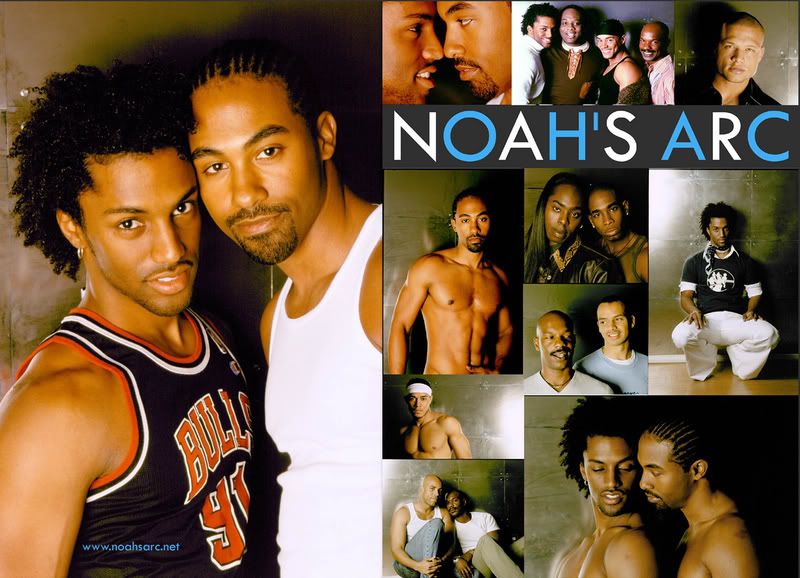
Growing up, I've seen some changes. On networks like Logo and definitely Showtime, we've seen a lot of shows that brought some interesting characters. The shows that made a great impact on television is Queer As Folk, The L Word, and Noah's Arc.


These were amazing shows, and I am proud of their success on television. Through the years, I have seen films and tv series progress rapidly. The day I saw Noah's Arc: Jumping The Broom became a box office success, the doors have opened because we wouldn't stop knocking. Better yet, we didn't have to knock. We ripped that door down and tackled the media down in the street. We are still doing our best to bring great films, television shows, and even talk shows.

But here is my theory on the whole thing. I believe that we have a few resources that we can use in order to do it. It's something that I thought about when I saw my role model Tyler Perry do it.


When he started making movies, Hollywood wasn't calling him. In the beginning, they were against Tyler's messages. They said either he makes the types of movies they recommended, or he can walk away and be unsuccessful in cinema. Tyler walked away and built us own empire using the resources he had. He formed a long lasting deal with Lionsgate, and his films have been grossing close to $400 million dollars. Because of this success, Hollywood now calls him.

This makes me believe that we need to do our best with the resources that we have. If we can accomplish that, then they will be calling us. Because they now realize that this is an opportunity that they can't walk away from. One of the best resources we have is the internet. Facebook, Twitter, Youtube, Skype, and many more have made it very useful for us

If we want a television show, let's create it and put it on Youtube. Of course, making money online is a necessity. But if we can promote the heck out of it, we will be very proud. Take my friend Nathan "Seven" Scott. The first time we met each other was when we were doing our own talk shows. I was doing "Zolra's Corner" and he was doing "The & Show". Since then, I have watched him move on and become a better person. He went from"The & Show" to other tv shows he created, to the current show "We Are The Media". I check the show everyday. It is getting so many high views.

One more thing I want to view on television series and movies. I see we are doing our best. We are premiering these new movies to film festivals every year. We have tv shows that have gay characters as the main parts of the show. But there are still some of us that have amazing ideas that would be great to have up there too. My thing is to use what we have, which is the internet. The one show I was happy to watch on a daily basis online was Drama Queenz.

For shows like this, we need to promote the heck out of it to make sure it continues. Once we have this successful show online, we can premiere it in festivals and larger theatres.  When sponsors see how successful we are online (if the first episode gets like 1,000,000 views), then we can show that we have a success on our hands. Before you know it, someone like Patrick Ian Polk or Maurice Jamal would like to be a part of it.

As for movies, do the same thing. Keep on promoting the heck out of it. You will see great results in the end. That's what happened to Noah's Arc. After watching it at a festival, Logo knew they had a hit on their hands. Then it became a tv show. For movies, I think we should try the DVD business. It's a theory I thought of after watching Mary-Kate & Ashley Olsen grow their business when they were kids.


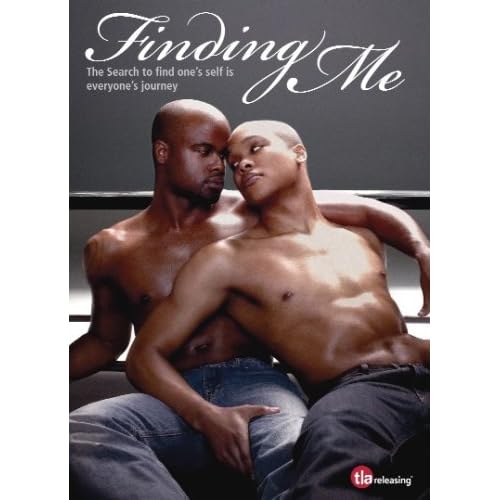
When they were kids, business executives predicted the business after watching how one of their first films was more successful when it was released on DVD. So they started working on straight to DVD films, and it grossed over $100 million worldwide. It's all about predicting the business. Finding Me did that.

I consider this one of the best promotions I've ever seen. The team used Youtube to release trailers and sneak peaks of the movie. The cast and crew went to events to promote the film. This led to blogs talking about it so much, more people wanted to find out more about it.

Once the film came out, it was an instant success. And the reason why it became a success is because they predicted the business and used the resources they had.

We keep on wondering how we are going to do things like this. My only answer for that is "The resources you need are right in front of you."
And it's because of these resources that make us a force that can't be stopped. Comment if you agree with me on this.


Tuesday, October 27, 2009

Face the Book in Business

The MEGA World of Lil Mogul
by Lil Mogul & Jaime Tedford
We humans, it turns out, are social. Whether in the real world or on the interwebs, we like to connect, share and express ourselves. Detractors of the social networking phenomenon diminish it to a telescope and microphone for creeping, stalking, and peeping.
In my experience, it's just the opposite. It's a magnifying glass and megaphone putting me out there for discovery and exploration. Our profiles are a window into our lives, or at least a carefully crafted version of our lives. We have reversed the peepholes on our apartment doors, office windows and invited the world to see us in our natural habitat.

It's an idea one of my associates labeled "reverse voyeurism" and betting on it is the closest thing to a guarantee of social media success that I know. Here's a pass at trying to translate this observation into some actionable social media opportunities.

Facebook starts with a face
Reverse voyeurism is a sister of vanity and a cousin of exhibitionism. The very idea of a "face book" starts with a photo, matching just another face in the crowd with a real identity. If social networking were only about vanity and exhibitionism, then this match would be the end of the story.

Real, honest-to-goodness social networking at its core is about the subtle invitation for my friends to get to know me better. Like a well-poured drink, it's also a powerful social lubricant. Would I ever have been so presumptive as to place 40th birthday photos in an envelope to send to 200 of my closest friends? Not likely. Yet with click of a few buttons on my new HTC Sprint phone (I still do not know how to use it fully) and the through the magic that is my news feed, it's almost like you were invited to my birthday bash (no need to send a gift, I understand).

Yup, something deep in my DNA wants all my friends and family, extended or close, to know I turned 40, had great weekend, partied and don't look a day over 29. Facebook is the number one photo site in the world not because it's a better photo utility than companies dedicated to that pursuit, but because it makes it more OK to share photos. The context is casual. "Hey everyone, check these out ... or not, whatever."

Obvious marketing observation: Incorporate photos into your social media strategy. Nothing captures and extends the lifespan of a moment in time like a simple digital image. Be the company that extends live experiences with your brand to the social web.

Enough about me, what do you think of me? Speaking of sharing little gems about me, the results of the last few Quizzes I've taken reveal I am; a "Audi" (What car-type ARE you?), a fashionista undercover (How fashion forward ARE you?) and Tennis (Golf or Tennis? The Game of choice). Honestly, it has baffled me for a long time why my friends, sophisticated and educated people, kept taking these personality quizzes.

It wasn't until I started considering the effects of reverse voyeurism that the answer came to me. We don't do it to learn more about ourselves; I already know I am a undercover fashionista that LOVES The Williams Sisters. We do it to provide one more puzzle piece to our friends. Hoping they continue to be interested in piecing together the 1,000-piece jigsaw that is me.

Oversimplified social strategy: Be the brand that asks me about me, but not so you can sell me more stuff. Do it so I can help my friends know me better. You'll get to know me better in the process, and eventually will sell me more stuff, I promise.

Duhh, Social Media Observation: I am what I'm a fan of. Give me a reason to add your brand to the mosaic that is me. Respect and recognize my permission to market to and through me. And how about a little something, you know, for the effort?
Ready, set, reverse your voyeursim
So is your brand ready to practice reverse voyeurism? As tentative as we all were putting our personal lives in that window, it's understandable the hesitation of many brands. Remember however that full transparency is a myth in person as it is in business. We still curate, put our best features forward, select the tidbits that we broadcast about ourselves.


Don't get all hung up on your own brand's transparency; you're not that interesting. Instead, keep asking how you're helping real humans be more transparent to other real humans who are their friends. When you turn the peephole around, I think you'll feel much less creepy, more like an invited guest and maybe even a friend.
Facebook.com - Rick Pelzer

Tuesday, September 22, 2009

Break Though with Your Brand

Do you really know your brand?
by Lil Mogul
After months in development, the new product is ready for worldwide launch. The product manager or (imagine, company owner or president) tells the creative team to use a picture of a globe. "But our brand is about what we do for people. Our brand guidelines specify images of humanity," the designer pleads. "I don't care. Use the globe," the product manager demands.

Unfortunately, there's always the need to balance business objectives with branding goals. "It's not that product managers ignore branding. They don't understand how to leverage it." There are good reasons why some product managers and company owners misunderstand branding and its value. Managers are trained to show quick results, manage expenses, think in the short term and owners too. The career timetable of many in middle management can be the opposite of the time required to build a corporate brand. The full equity of a brand takes years to realize; a middle manager and owners measures success in quarters.

Rather than be an obstacle to quarterly success, a carefully managed brand can be a long-term solution to short-term challenges. According to the VP of the database company, her solution is brand education. "Once they get it, they develop stronger value propositions and products because they are leveraging the full power of what the brand has built."
A better understanding of how the brand translates to business can make a difference in behavior.

Brand training that goes beyond communications is key to helping middle managers and owners understanding the economic value of supporting their brand. A strong commitment to branding on the part of the company can often eliminate individual agendas. Believing in the brand, following the guidelines and understanding the brand's role as a tool to achieve business objectives can help break through the bottleneck.

Here's a few tips to make your brand work to get your products to market faster, on budget, and beat the competition.

See branding as an investment and marketing as an expense.
Every dollar that's ever been spent on the brand adds leverageble equity to help launch new products, or associate brands with the parent company.

Follow brand standards to speed up success.
Guidelines help keep the creative process on track, which eliminates wasted time pursuing ideas that aren't "on brand."

Build the brand, don't erode it.
Launching a new brand without following corporate branding may solve immediate issues, but over time -even a short time- it can erode positive associations or create negative ones. Get the job done AND build the brand.

Celebrate the organization, not the individual.
Like the bricklayer who can point to a completed skyscraper and tell his child he built the building, you are contributing to the overall success of the company when you stay on brand.

Tuesday, September 1, 2009

Every TUESDAY with Lil Mogul

The MEGA World of Lil Mogul

Written by: Richard E. Pelzer II
aka Lil Mogul

Who is Lil Mogul? I am your entrepreneur buddy, whose positive empowerment will assist you on living that entrepreneurial lifestyle. Making that decision to start your own business affects not only you but everyone currently in your life. Creating a strong support group and surrounding yourself with other likeminded business people is very necessary while taking the journey. Lil Mogul will share stories, introduce you to other business owners, friends and family members who are also on the road of creating personal wealth. We will explore together the globe view of the business world.In the first chapter of business management 101 it states that one of the most valuable assets a company has is its good name. Within the past 10 years, a new entrepreneur has arisen. I call them, newbiepreneurs. With the rapid dissemination of information on the Internet, portable social networking and increased reliance on search engines, businesses wishing to stay viable and protect their reputation must actively monitor and react to conversations about their brand online. It’s a make or break-out phenomenon for success platform.
This same business method can be translated to one's personal brand. Who are you? For high-profile and high-net worth individuals, damaging and inaccurate misinformation on the Internet can destroy business credentials; wipe out lucrative contracts and compromise personal relationships. While a newbie can enter the marketplace with a “good idea” and a dream create an allusion of a multi-million dollar empire. In today’s troubled economic with increased media scrutiny of our business leaders and public figures, protecting one's reputation online is no longer a luxury, it's a necessity.

The Internet has caused not only a shift in the way information is delivered, but in how people seek it out and how it shapes our content consumption. Keep in mind that in April 2009 alone, there were more than 8.6 billion searches happening online according to Google the world’s number 1 search engine.

As businesses continue to navigate the challenging economic climate, where decisions have a broad reaching impact, it is no longer simply a "good idea" for company owners and business leaders to engage in online brand reputation management, it's a social responsibility. Social media is here to stay. In plain English, “learn it and learn it well!” Moreover, if a tarnished reputation can negatively affect the bottom line in times of economic growth, it's even more of an imperative in times of crises to protect the good-name of our brand as well as the individuals so closely associated with it.

The phrase of the week…
Rich people see opportunities, Poor people see obstacles.Rich people see potential, Poor people see potential loss. Rich people focus on rewards, Poor people focus on risks.

Rich people buy assets, things that will collect value.Poor people buy expenses, things that will definitely go down in value.Rich people collect land, Poor people collect bills.So all my newbiepreneurs, where do you stand and pour the negative energy out?
Let mix it UP PEOPLE together!
Photo by DexStar G. The Peoples Photographer

Monday, July 20, 2009

Welcome to the MEGA World of Lil Mogul

Written by: Richard E. Pelzer II aka Lil Mogul

Who is Lil Mogul? I am your entrepreneur buddy, whose positive empowerment will assist you on living that entrepreneurial lifestyle. Making that decision to start your own business affects not only you but everyone currently in your life. Creating a strong support group and surrounding yourself with other likeminded business people is very necessary while taking the journey. Lil Mogul will share stories, introduce you to other business owners, friends and family members who are also on the road of creating personal wealth. We will explore together the globe view of the business world.

In the first chapter of business management 101 it states that one of the most valuable assets a company has is its good name. Within the past 10 years, a new entrepreneur has arisen. I call them, newbiepreneurs. With the rapid dissemination of information on the Internet, portable social networking and increased reliance on search engines, businesses wishing to stay viable and protect their reputation must actively monitor and react to conversations about their brand online. It’s a make or break-out phenomenon for success platform.


This same business method can be translated to one's personal brand. Who are you? For high-profile and high-net worth individuals, damaging and inaccurate misinformation on the Internet can destroy business credentials; wipe out lucrative contracts and compromise personal relationships. While a newbie can enter the marketplace with a “good idea” and a dream create an allusion of a multi-million dollar empire. In today’s troubled economic with increased media scrutiny of our business leaders and public figures, protecting one's reputation online is no longer a luxury, it's a necessity.

The Internet has caused not only a shift in the way information is delivered, but in how people seek it out and how it shapes our content consumption. Keep in mind that in April 2009 alone, there were more than 8.6 billion searches happening online according to Google the world’s number 1 search engine.

As businesses continue to navigate the challenging economic climate, where decisions have a broad reaching impact, it is no longer simply a "good idea" for company owners and business leaders to engage in online brand reputation management, it's a social responsibility. Social media is here to stay. In plain English, “learn it and learn it well!”
Moreover, if a tarnished reputation can negatively affect the bottom line in times of economic growth, it's even more of an imperative in times of crises to protect the good-name of our brand as well as the individuals so closely associated with it.
The phrase of the week…
Rich people see opportunities, Poor people see obstacles.
Rich people see potential, Poor people see potential loss. Rich people focus on rewards, Poor people focus on risks.

Rich people buy assets, things that will collect value.
Poor people buy expenses, things that will definitely go down in value.
Rich people collect land, Poor people collect bills.

So all my newbiepreneurs, where do you stand and pour the negative energy out?

Let mix it UP PEOPLE together!
Photo by DexStar G. The Peoples Photographer

THEFUTUREFORWARD.NET HEADLINES

The FUTURE

↑

LinkWithin

Blog Widget by LinkWithin