A
Ramp to Paradise 2 is a multi-media dance narrative of one night during
the 1980s at the edgy, predominantly Black and Latino LGBT New York
City dance club, Paradise Garage which featured the awe-inspiring DJ
talent of the late Larry Levan, live performances by everyone from
Luther Vandross, Jocelyn Brown, Patti Labelle, Grace Jones, Madonna to
Sylvester.
Ramp 2 is presented in commemoration of 25th anniversary of
the closing of this memorable underground fixture of the New York club
scene.
Tickets: $25.00 (Ticket prices includes performance and after party)
Thursday, November 08, 2012 at 7:30 PM Kumble Theater for the Performing Arts
One University Plaza Brooklyn, NY 11201
Phone: (718) 488-1624 Website: www.kumbletheater.org
E-Mail: info@kumbletheater.org
Lady Gaga may adore cult pop icon Grace Jones, but Ms. Jones won’t picking up her t-t-telephone calls any time soon.
The 61-year-old Jamaican-born model/actress/fashion radical, best known as a club performer, Warhol muse, Bond girl, hair maverick, and all-around fabu freakshow, was recently asked by London’s Guardian newspaper what she thought of the world’s current preeminent mistress of carcinogenic eyewear. Jones’ reply? “I really don’t think of her at all. I go about my business … I wouldn’t go to see her.”
And would they ever work together? “She did [ask], but I said no. I’d just prefer to work with someone who is more original and someone who is not copying me, actually.”
Mild-ish words, actually, from the woman who gave the world Strangé—and one wonders why she doesn’t call out her other obvious acolyte, Rihanna—but she can hardly be blamed for drawing the comparison.
As stated on The Future on February 5, 2010, Gaga’s genealogy has never been much of a mystery: She is unabashedly built from the DNA of many stars who came before her—including but not limited to Madonna, David Bowie, Roisin Murphy, Prince, Cher, Labelle, Freddie Mercury and of course the original cult-of-personality maestro himself, Mr. Warhol.
Like the recent M.I.A.-chugs-the-Lady-haterade episode, this one will surely be met by Gaga loyalists‘ insistence that the Lady is, like, ten billion times more amazeballs than Jones, who is just too jealous/old/All About Eve-ish to acknowledge her younger and more commercially successful rival.
If they do, they may be touching on some truth (sometimes, Strangé get cranké), but they’re missing the larger point: Gaga, definitively, could not exist without Jones, Madge, and Mercury, and she seems very much aware of that. In fact, she acknowledges them ad nauseum in her album liner notes and interviews and in, basically, the way she lives her outsized life-as-performance-art existence (bedazzled face crustaceans for brunch! Personal head planetarium for Ellen!) every day—if not in the fairly straightforward and markedly commercial (much more, at least, than Grace’s ever were) pop songs that anchor it all. I AGREE and I am the BIGGEST GRACE JONES FAN AROUND!!! Lil Mogul...
If progenitors like Jones are sometimes a little bothered that Gaga sails so easily down the far-out road they paved—and with a much fatter wallet tucked in her triangle pants—is that jealousy, or just humanity? I call it LIFE!!!
Most may view Nicki Minaj as just another rapper/singer/performer; but the multi-faceted entertainer is much more than that, she’s a bankable brand that’s only just begun to blossom. In a few short years, Nicki has influenced trends through her music and unmistakable fashion sense, and her involvement in cosmetics, television, hair and even the floral industry (Nicki has exclusive pink collection bouquets available on flowers.com for Valentine’s Day) has helped spike sales and visibility for a number of ancillary brands. Whether her detractors like it or not, Ms. Minaj is a one-woman marketing guru. BlackEnterprise.com takes a look at some of the brands the young starlet has—directly or indirectly—helped bolster by association.
We're not sure what Polaroid creative director Lady Gaga thinks of Polaroid's 300 camera, a chubby little device that was released late last year. And we're still waiting for the Gaga-branded camera that Polaroid promised when the partnership was unveiled at the 2010 Consumer Electronics Show. So we were intrigued to see V magazine's gallery of Gaga-on-Polaroid pix, snapped by Gaga's creative director, Matthew Williams. Watch Gaga explain why she's working with the revived photography brand. Are you a Polaroid traditionalist?
When asked to write an icon article for Black History Month during NY Fashion Week about a black designer, I was honored and very excited! I started my college career in the late 80’s as a fashion student, a pure fashion junkie. I knew my STUFF! Watching CNN’s Style with Elsa Klensch, Fashion America hosted by Allison Anna Brooks while reading W religiously when it was still printed on newspaper stock. I could hold my own with the New York fashion FIT’s kids.
So writing on a fashion icon was not the problem but choosing who to write about became my dilemma. Who was the ideal black fashion icon? And Two Names --- Two Names stood on the fore-front. Willi Smith and Patrick Kelly. Willi or Partick? So, I will bless the kidz with knowledge on both men who are true Icons!
Willi Smith has been called “the most successful African-American fashion designers in fashion history.” At the peak of his success in 1986, his company Williwear Ltd. sold $25 million worth of clothing.
A leap-year baby, Willi Donnell Smith was born to Willie Lee Smith, an ironworker, and June Eileen Bush Smith, a homemaker, on February 29, 1948, in Philadelphia. He studied commercial art at Mastbaum Technical High School and studied fashion at the Philadelphia Museum College of Art. In 1964, Smith won two scholarships to Parsons School of Design and moved to New York. In 1967 he quit Parsons to pursue a career designing on his own. In 1969 he designed a label for Digits and freelanced with Arnold Scassi and Bobbie Brooks Sportswear Companies. In 1973, Smith along with his sister Toukie , model and actress best known for her role on NBC’s 227 as Eva Rawley, founded their own clothing company; however, lacking business experience, soon saw their enterprise fail. Smith continued to design and in 1976 he went into business with Laurie Mallet and formed “Williwear."
Willi Smith designed with natural fabrics, a relaxed, comfortable fit, colorful and eye-catching material, with a reasonable price tag. Smith's style has been described as "street couture," a designation with which Smith quibbled. While acknowledging that he was acutely aware of what was being worn on the streets of America, he emphasized that he was not designing "for young people who like to look alike," but rather for people who wanted "real clothes" with a sense of designer fashion. His oversized clothing anticipated the casual styles and attitudes of the following decades: baggy trousers and shorts, slouchy sweaters and generously proportioned shirts.
Today, Hip Hop Style is almost identical to the designs which he started in the 1970's and 1980's. His colours and fabrics were bright and easily mixed together. At first WilliWear produced only women's clothing, but in 1978 the WilliWear Men line was added. Smith won a Coty American Fashion Critics' Award for women's fashion in 1983 and a Cutty Sark Menswear Award in 1985. In the golden years of WilliWear, Smith designed the wedding dress worn by Mary Jane Watson when she married Peter Parker in the Spider-Man comic book and comic strip in 1987 and the suits for Edwin Schlossberg and his groomsmen when he married Caroline Kennedy in 1986. Smith also created the uniforms for the workers on Christo's 1985 wrapping of the Pont Neuf bridge in Paris and clothes for Spike Lee 's 1987 film School Daze (1987).
At the young age of 39, Smith died unexpectedly after contracting pneumonia while on a trip to India, apparently as a result of AIDS. It is suspected that Smith, himself, didn't know he had the disease although those around him knew he was fragile in the end days. Several young designers worked and apprenticed with Willi; Anthony Mark Hankins, James Mischka (partner in Badgley-Mischka design house) and John Bartlett, who took over the design when Smith died, and remained till 1990.
But then, I discovered the designer we all wanted to truly be… Patrick Kelly. Small town dress maker becomes PARIS Fashion Designer Royalty! He let us all know it could be done.
Patrick Kelly known as “The Prince of Paris” was born in Vicksburg, Mississippi, on September 24 around 1954. Kelly kept the exact year of his birth a secret. As he stated in a 1986 Time magazine article, "I never tell my age because I hope I'll always be the new kid on the block." He came from a working-class African American family. His mother had a master's degree and worked as a home economics teacher. His father worked as a fishmonger, insurance agent, and cab driver. At some point in his childhood his father left home and he was raised primarily by his mother and grandmother, who worked as a cook for an upper-class white family. His keen interest in fashion showed even as a child. His earliest recollection of this passion was when he was about six years old. One day his grandmother brought home a fashion magazine and Kelly noticed that there were not pictures of black women in it. His grandmother explained that fashion designers did not have time for black women and Kelly was determined to change that notion. Kelly taught himself to sew and began his career as a dress maker at an early age. While still in junior high Kelly began to create and sew party dresses for girls in the neighborhood. Later in high school he began designing department store windows and drawing sketches for newspaper advertisements. After he graduated from high school in 1972 Kelly attended Jackson State University on a scholarship and studied art history and African American history. While only spending two years at Jackson State University, Kelly says, he was fed up with racism, Mississippi-style. It was the mid-seventies. He caught a Greyhound bus to Atlanta, the city "too busy to hate." He'd heard there was an Yves Saint Laurent boutique there. He did not have a place to live, a job or much money did not weigh heavily on him.
For a while, he says, he lived on the streets and worked for AMVETS, an American veterans' organization. He volunteered to decorate windows at the Yves Saint Laurent boutique called Rive Gauche and eventually got a paying job there. In his spare time, he sewed clothes, sometimes redoing used ones, and sold them on the streets. He also worked as an instructor at the Barbizon Modeling School, where he became friends with several fashion models. One model, Pat Cleveland, convinced him that he should move to New York City if he wanted to really get noticed by the fashion industry. That same year, Kelly followed his friend's advice, moved to New York, and enrolled in the prestigious Parsons School of Design. He struggled financially, however, he was not able to find a steady job and he supported himself with sporadic work, including a part-time job working at Baskin Robbins and selling his dresses to the New York models. Then his friend Pat Cleveland suggested that he move again, this time to Paris. Kelly laughed at the idea because he knew he could not afford the trip. However, when a one-way ticket to Paris was mailed to Kelly anonymously in 1979, he seized the opportunity and moved to the fashion capital of the world. Looking back on this important move, Kelly told Time magazine in 1986, "I can't say I wouldn't have made it in New York because I didn't stay to find out." Kelly had much better luck in Paris than he did in New York. He was quickly hired as a costume designer for a nightclub called Le Palace and continued to sell his own creations on the street. He even sold homemade fried chicken dinners to make ends meet. His hard work and perseverance paid off for him. People began to recognize Kelly's designs and soon there they were in demand. In 1984 an exclusive Paris boutique called Victoire hired Kelly and gave him a workshop and a showroom. Only a year later Kelly went into business for himself. He and his friend, photographer Bjorn Amelan, joined together to create Patrick Kelly Paris. Soon they were making outfits for Benetton and an upscale Right Bank boutique. Kelly quickly established his reputation as a designer and his business blossomed. In 1987 he was interviewed by Gloria Steinem for NBC's Today Show. Steinem then introduced Kelly to Linda Wachner, the CEO of Warnaco, an apparel manufacturer. Kelly signed a five million dollar contract to create a line of clothing for Warnaco, which gave him international recognition. Soon afterwards he also signed two licensing deals with Vogue Patterns and Streamline Industries for his famous big buttons. After making these deals Kelly's business revenue increased from less than one million dollars a year to more than seven million dollars a year. Kelly's popularity stemmed from his fun, colorful, and exotic style. As the Washington Post described him in 1988, "Patrick Kelly has a witty way with fashion." Kelly's earliest influence was his grandmother. Since she had limited resources, she would replace lost buttons on his clothing with whatever she could find and she would often add her own touch to spruce up the clothing a bit. Large, colorful buttons later became a trademark of Kelly's designs, but his creativity did not stop there. He decorated dresses with colorful bows, embroidered lips and hearts, and even billiard balls.
In 1986 Time magazine described his clothes as "fitted, funny, and a little goofy." Price was an important factor for Kelly's designs and he stressed the importance of differentiating between cheap and affordable. Contemporary Fashion described Kelly's designs as "unpretentious yet sexy, affordable while glamorous." He strove for the latter in order to distinguish himself from other Parisian designers whose clothes came with a hefty price tag. In a 1986 Time magazine article Kelly declared, "I'm the hero of people who just don't want to spend a lot of money on clothes."Kelly's designs also carried a Southern flavor. He was proud of his heritage and his upbringing as a black child in Mississippi was reflected in his work. For example, he was known for his watermelon brooches, dresses decorated with gardenias, and polka-dotted bandannas. He also made Billie Holliday and Michael Jackson earrings and used Josephine Baker memorabilia to decorate his showroom. Kelly's use of African American culture in his art even generated some controversy. He created lapel pins featuring black babydoll faces that some thought were offensive to African Americans. Kelly defended the image as a part of Black history. In fact he had a collection of over 6,000 Black dolls from various eras of American history that he hoped to house in a museum. Nonetheless, the pins were more popular in Europe than America because some Americans were afraid the image would be misinterpreted.
In an interview with Essence magazine, Kelly noted his surprise regarding the controversy. He said, "Recently somebody Black told me they were harassed about wearing the Black baby-doll pin. And I thought, you can wear a machine gun or a camouflage war outfit and people think it's so chic, but you put a little Back baby pin on and people attack you." These pins became a trademark for Kelly and he gave them away to everyone he met. It was estimated that he gave away 800-1,000 pins a month. Kelly's carefree style and southern heritage were apparent in his own image as well. He was most often seen dressed in a pair of oversized denim overalls. He often sported a baseball cap and his favorite means of transportation was a skateboard. He had a fun-loving and extroverted personality. For example, he would start his fashion shows by entering the stage dressed in his overalls and spray-painting a large read heart on the backdrop of the runway. Parisians loved Kelly's persona as much as they loved his designs. Despite his humble beginnings and simple personal style, Kelly was a sharp businessman and a skilled marketer. He understood the importance of publicity in the fashion industry. Kelly's designs never became a household name, but his clientele included many famous people, such as Bette Davis, Grace Jones, Jessye Norman, Isabella Rossellini, and Jane Seymour. In 1988 Kelly was voted in as a member of the Chambre Syndicale, an elite organization of designers based in Paris. Kelly was the first American to join the ranks of famous designers such as Saint Laurent, Lagerfeld, and Lacroix. One privilege of being a member of this elite group was the opportunity to have a show at the Louvre Palace. True to Kelly's fun style, his first show was a spoof on the Mona Lisa. Unfortunately, Kelly's career ended soon after he became famous. Kelly died on January 1, 1990. While the official cause of death was listed as bone marrow disease, many suspect he died of acquired immunodeficiency syndrome (AIDS) like several other young prominent figures in the fashion industry who had died in the 1980s, including Perry Ellis and Willi Smith. By the early 1990s the fashion industry had suffered huge losses, both personal and financial, due to the epidemic. A 1990 article in Time magazine declared that "The industry's creative energy is being dissipated - and diminished - by AIDS."Kelly's rather sudden death left a lot of unfinished business. He was negotiating licenses for his designs for furs, sunglasses, and jewelry.
Love her or hate her, there’s no disputing that 2009 belonged Lady Gaga. With a theatrical persona inspired by the likes of past DIVA’s, the name “Gaga”—taken from a song by the latter’s band, Queen—has acquired a meaning all its own, simultaneously evoking catchy pop music and avant-garde fashion (as well as a growing army of imitative fans). But Lady Gaga’s forward-pushing fad is not a fleeting one. Thanks to two back-to-back albums—the first aimed at the fans, the second aimed at the critics—she has shown that her music and revolutionary style are here to stay into the new decade and beyond.
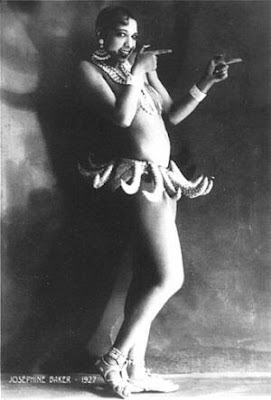
However, let’s check out female theatrical personas of THE CENTURY!!!
What New York rapper is royal, empowering, majestic, and stylish? Abdul Jabbar or for us King Jabbar. This Capricorn is on a journey toward breaking into the LGBT music world as well as mainstream. I had the pleasure of sitting down talking with him about who he is and what I think he needs to do in order to get his music career on the next level.
Now a days gay celebrities are popping up everyday, in New York City alone there is a new socialite who is making a song, throwing a party, or trying to be the next big thing, however this city has only birthed a few that are mainstream gay celebrities who are creating careers that are hitting outside the 5 boroughs or the New Jersey area. What is that Maurice Jamal, XEM Van Adams, Maurice Runea, B. Scott, Bry’nt, Derrick L. Briggs, DJ Baker, or Nathan H. Williams are doing? The formula is really simple they are hot and they are promoting themselves. My entertainment Mantra has always been “If you cannot sell yourself, no one else will and this is very important to break into any industry. As for King Jabbar he is halfway there, he has the talent, style, charisma, looks, now we have to get him his crown, you cannot be royalty with out your crown.
When you talk to King Jabbar you don’t get rapper instantly, you would think that this rapper would be a neo soul artist who would meditate in the middle of central park with a tribe. He is just so spiritual and down to earth, which is why he credits Eryka Baydu as his influence. Being into numerology, astrology, oils, and keeping your aura in white light is what keeps King Jabbar grounded in his quest for stardom. King Jabbar has always wanted to be in the music business, because he loves entertainment, he briefly modeled in the past; however stopped once it took away from his relationship with others and his music. It is no surprise that he was apart of fashion, because he and Grace Jones could be best friends when it comes down to his fashion sense and his addiction to Soho (must see shopping area in NYC). With his seducing eyes, sense of style, and his attitude toward thought before expression he has several tools that will get him far.
As King Jabbar sat in a huge chair facing me, I felt like a king was looking right through me. Although I was conducting the talk, I sensed some aggressiveness within him. That’s when romance came up, I was very intrigued with how King Jabbar felt toward romance and where did that fall in his life as of now, as King Jabbar went through a list of all his goals that he has planned for the next year (an album and mix tape included) I learned that love right now was not a priority; however a supportive friend who can bring something to the table is always accepted and in doing so safer sex practices are a must. He is very passionate about our community protecting ourselves and thinking prior to your actions. When he is in a relationship though this shy Capricorn may be a little more aggressive than passive, just don’t expect for him to make the first move.
When you want to catch this up and comer you better hope to catch him shopping in Soho or a Friday night (his favorite day of the week), cause other times he is working on his passion “music”. When asked who you could compare yourself to, he responds not really anyone (they all say that), yet if you are a Busta Rymes, Andre 3000, or Shaggy Fan, this is the LGBT artist you want to get into… A king is born! Check him out and leave a comment, tell The FUTURE what you think! KING JABBAR MUSIC HERE