Thursday, February 3, 2011

Charlene Davis says Pay Attention to the Red Flags!

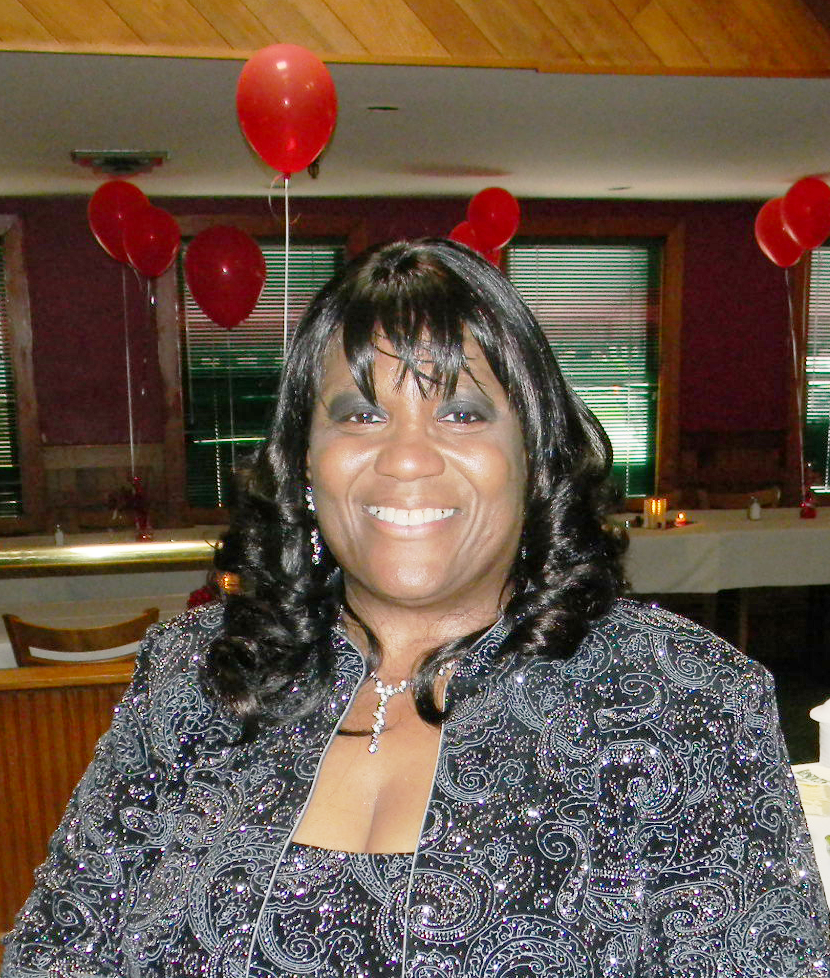
Meet Charlene Davis, author of the hot new motivational book for women entitled: "Pay Attention to the Red Flags"


This interview is very personal and close to my heart as Ms. Davis is one of the very women in my life who changed my diapers.  I recently spoke with Charlene about her new book and here is what she had to say:


1.  Let's talk about your process.  When did you first know that you wanted to write a book I have known that I wanted to write a book since I was a young girl. The desire has been in my heart for years. Writing has always been a great way for me to express myself to others.

2.  How long did it take for you to release the final draft of your manuscript?
  It took me 5 years and 8 months to submit my first manuscript.


3.  Where did you write most of you book?  Did you have little private place to escape to when the world made too much noise?  I wrote most of my book in the privacy of my home. When I wanted to get outside of the home, I use to drive to the park,  sat in my van, and I wrote for hours.


4.  The book is hilarious.  There were moments when I actually laughed out loud.  What inspired some of the anecdotes and stories?  For years, I have listened to people with relationship issues. Plus, I have had my own personal experiences. I use to tell myself. "Charlene, you need to write a book about some of these experiences." Although some of the information is fiction, a lot of it is based on facts.


5.  How much of your book is true top life for you?  A small portion is true to life for me.   If I wrote all about myself, the book would have been 300 pages.


6.  Did you ever imagine in your lifetime that you would become a published author?  Yes, I always knew that I would be a published author. I believe in setting goals, finding a way to make it happen, and dream big or don't dream at all.


7.  You are telling women to pay attention to the red flags.  What was your most memorable red flag in your own life?  The most memorable red flag was when I called my ex-husband's job, and I was told that he was off for the day. However, he told me that he was going to work.
Here is an excerpt from the book:


How to Identify a Healthy Relationship
Healthy relationships are fun and make you feel good about yourself. We can have a healthy relationship with anyone in our life, including your family, friends, and dating partners. Relationships take time, energy, and care to make them healthy. The relationships that you make in your teen years will be a special part of your life and will teach you some of the most important lessons about who you actually are.


This guide will help you understand different kinds of relationships, what makes each relationship special, and how to communicate in a positive way. Communication and sharing are the most important parts of any healthy relationship between two people. By talking and listening to one another, you and the other person can figure out what your common interest are.


Respect and Trust: In healthy relationships, you learn to respect and trust important people in your life. You work through disagreements, and no one leaves the conversation mad and upset. You should feel safe around the other person and feel that you can trust each other with your secrets.


Tips:


Get to know a person by talking on the phone or at work before you go out with him for the first time.  Go out with friends to a public place or a restaurant the first few times.


Plan an activity, like going to the movies or picnic.


Be clear with the other person about what you feel comfortable doing.


Tell at least one family member where you are going, and who you will be with, and how to reach you.


You can purchase your own copy at www.amazon.com

Wednesday, February 2, 2011

Arts.Advocacy+Wellness: "Loving to Death"...NotEnoughGood.com


Loving to Death
by
Thenera Bailey

President, The SISGI GROUP and Founder, NOTENOUGHGOOD.COM


David Kato was probably murdered because of how he loved. That was his only crime. Not because he treated people badly. Not because he stole or created terrorism. His murder probably occurred because he was an openly gay man and an outspoken advocate for gay rights in his country. He was bludgeoned to death on January 26, 2011 just a few weeks after winning a court injunction against the magazine that called for the death of many of Uganda’s gay citizens.

At his funeral, rather than sharing remarks about the loss of a beautiful person or the ways that David’s life touched and empowered others, Regardless of how you might feel about someone in life it seems unforgiveable to speak badly about him or her while acknowledging his or her passing. It seems an extreme and cruel action when the individual is not alive to neither defend nor address your actions. But somehow it has become a popular method at the burials of LGBT citizens around the world. Here in the US, a religious group actively seeks out funerals of LGBT citizens as a way to spread their beliefs against homosexuality. It seems so counter to the messages of love and respect for your neighbors that are throughout Christian scripture.

Over the weekend, I watched a 2009 Lifetime movie called Prayers for Bobby. Sigourney Weaver played Mary Griffith, a devoutly Christian women who’s son was gay and eventually killed himself, in part because his close knit and religious family indicated their disgust for his actions and pushed for him to change. Unable to change as they requested, even after therapy, prayers and a consistent desire, he took his life by jumping off a bridge into oncoming traffic. Mary Griffith struggled with his death and her understanding of scripture and allowed the minister at his funeral to speak negatively of her child and his lifestyle. Eventually Mary comes to understand how wrong she was and becomes a strong advocate for gay rights. Unfortunately, she had to lose her son to get to this place of understanding.

In Uganda, living as a homosexual can bring you a sentence of life in prison. In many other places it can lead to capital punishment, torture or exile. For those involved in human rights and for individuals who are working for social change, we must continue to understand these types of larger social policies around the world. Most importantly, we must continue to question the harshness of laws around the world.

If this were an issue of individuals of different races loving each other, one might be quick to state how wrong it is to stop people from loving one another. It has become a societal norm for the most part in the U.S. to not make issue of interracial relationships. It was only a fewdecades ago where these same relationships would have been illegal. At the time, bible verses about separation were also used as reasons against race mixing and individuals that went against this societal norm faced persecution. Today, that type of thinking seems almost comical and represents a sad moment in our country’s history. We learned that loving someone of another color is not wrong and does nothing to erode the fabric of the how our society functions. For the sake of more lives, it is hopeful that one day the same will be true for the David Katos and Bobby Griffiths of the world, who love the same gender.


Thank you Thenera for providing this story on A.A+W Wednesday atTheFutureForward.net. To Read this article in its original form and to comment (We invite you to leave a comment and share your thoughts) Log on to:

http://notenoughgood.com/2011/01/loving-to-death/


A.A+W
with Cornelius Jones Jr.
Tune in next Wednesday for more
Arts.Advocacy+Wellness with Cornelius Jones Jr.
Stay connected with me:
FaceBook: Cornelius Jones Jr.
Twitter: CorneliusJonesJ
FaceBook Fan Page: FlagBoy Official Fan Page of the Actor

Tuesday, February 1, 2011

History, Fashion & The Birth of the BLACK Fashion Model

Black Models Celebrated As Runway Revolutionaries

by Karen Grigsby Bates


Ron Galella/WireImage

Designer Roy Halston Frowick, known best by his middle name only, with model Pat Cleveland at a party following the Coty Awards in 1972. Halston frequently used Cleveland to showcase his fluid, body-hugging designs.


It was the fashion equivalent of a first-class prize fight — the Thrilla in Manila, only with high heels, not boxing gloves. In one corner, the titans of French haute couture: the houses of
Yves St. Laurent, Christian Dior, Hubert de Givenchy, Emanuel Ungaro and Pierre Cardin. Designers known for being elegant, traditional, proper. And in the other corner, some of America's best and brightest: Anne Klein, Oscar de la Renta, Bill Blass, Halston and a swiftly rising star, Stephen Burrows.


The audience at the Palace of Versailles that November of 1973 was star-studded, too: plenty of American socialites, one of the richest women in France, and the former Grace Kelly, now Princess Grace of Monaco. But as important as those ladies were, the event was transformed by the presence of several African-American models. According to Harold Koda, curator in charge of the Costume Institute at the Metropolitan Museum in New York, at the evening's end, fashion publicist Eleanor Lambert, who'd dreamed up the event, described it this way: "It was as if, on this cold night, all the windows of Versailles had been blown open."


Bethann Hardison (left) with Daniela Morera and designer Stephen Burrows. After she stopped modeling, Hardison went on to found her own agency. After two successful decades, she sold it and started the Black Girls' Coalition, an advocacy and support organization for black models, with Iman.


Around 200 people will gather Monday at the Costume Institute to celebrate these black models whose work that night made American fashion a contender on the world stage.


Koda says many people he interviewed who were at Versailles said the event nearly 40 years ago was special. "And what made the presentation of the Americans so riveting, magical and overwhelmed the presentation of the French was the presence of African-American models," he says.


Sandi Bass began her European modeling career the same year as the Versailles event, and remembers how excited she was to hear about black models triumphing in the cradle of the French fashion establishment.


"There was a certain kind of walk that we had at the time, and I'm just going to say it was pretty much the 'black girls' walk,'" she says. "We were free, we were spirited, we would smile. ... It was like a little trot down the runway." Bass, who worked for Givenchy for several years, says that after Versailles, a number of French designers turned to black girls as models and as inspiration. Many of the models served as both muse and sounding boards to the designers with whom they worked closely; the old don't-speak-unless-the-coutourier-addresses-you protocol was swept aside, Bass says. "We had no holds barred, the personalities just flourished and opened, and this created an excitement for the designers as well as the audience," she says.


Fashion historian Barbara Summers enjoyed a 17-year career with Ford, one of America's top modeling agencies. She says the models at Versailles caught the world's attention, in part because of their numbers. There had been black models before, but they were considered exotic rarities. "At Versailles they had never seen so many flagrantly beautiful black women at one time, so that was a revolution," she says. The turning-heads kind of revolution, not the chopping-heads kind. Summers says the Versailles audience was used to the chilly remoteness of the models who showcased European couture. "Black girls changed all that; they plugged fashion into what was happening now and that meant R&B, rock 'n' roll, dancing, music, popular culture," she says. "They brought the electricity of popular culture into fashion."


Koda says Versailles came at the moment the world was changing: It was getting younger, there was lots of social upheaval and people were ready for change.


Summers believes the black models who presented at Versailles were pioneers in overturning an outmoded aesthetic.

"They weren't planning on being revolutionaries, but they happened to be at the right place at the right time," she says. "And for a revolution to take place at Versailles, let me tell you, for these little black girls to be running around, kicking up a fuss, showing off, it had to be absolutely thrilling."


Many of the models served as both muse and sounding boards to the designers with whom they worked closely; the old don't-speak-unless-the-coutourier-addresses-you protocol has been swept aside, Bass says. "We had no holds barred, the personalities just flourished and opened, and this created an excitement for the designers as well as the audience," she says.


Fashion’s Tribute to the Greats: NYC Celebrates the BLACK Models of Versailles 1973


On Monday, January 24, 2011, New York City's Metropolitan Museum of Art was brooding with fashion alum for the tribute to the Models of Versailles 1973. Hosted by esteemed designer Oscar de la Renta and fashion great Stephen Burrows, the event brought out the likes of Diane von Furstenberg, Anna Sui, June Ambrose, Estelle, Sam Fine, Veronica Webb, Bethann Hardison, Michaela Angela Davis, Cicely Tyson and a bevy of others. Pat Cleveland, Billie Blair and Norma Jean Darden were just some of the models that were honored. The models of Versailles 1973 altered society's perception of American fashion's presentation almost 40 years ago.


Click here to see more photos of the event:

Jonesmag.com

David Kato's Harlem Memorial Service: Monday, February 7, 2011

THEFUTUREFORWARD.NET HEADLINES

The FUTURE

LinkWithin

Blog Widget by LinkWithin